Game of the Year 2018
(This is absurdly late, but I'm putting it up for archival purposes. Resolution for 2019: get this out in a timely manner)
Another year down, huh? 2018 was a weird one for video games. It was always going to be a tough ask to follow up the torrent of sheer quality and bombast that 2017 gave us - a year that gave us a new Nintendo console complete with a new Zelda and Mario, as well as a gigantic year for Sony exclusives and plenty of indies that entered the pantheon of modern classics. What 2018 did, above all else, was level the playing field. It felt like AAA dominance receded quite a bit compared to the 12 months prior; perhaps not in terms of sales, but in terms of a patchier release schedule and mid-tier/indie games taking the spotlight. Games as services dominated in a lot of ways - you only have to look at the domination of Fortnite in popular culture and the continued reinvigoration and relevance of games like Rainbow Six: Siege and Overwatch to see that.
The big releases were a hard bunch for the masses to get behind. Red Dead Redemption 2 did gangbusters in sales and broke Metacritic records, but was far weirder than you'd expect a game with an 8 year dev cycle and hundreds of millions of dollars in budget to be. God of War was a lauded revamp of a well-liked franchise, but was a PS4 exclusive. Fallout 76 was a disaster. Sea of Thieves was paper thin in terms of content. Black Ops IIII just did away with single player content. Far Cry 5 treaded water. I could go on.
It allowed for the smaller voices to be heard more clearly among the huddle of larger bodies. Even games that weren't my thing - Celeste and Return of the Obra Dinn being two of the bigger ones - impressed me with their focus and vision. So yeah, 2018 was weird. But it was really cool. I didn't feel like I'd played a heap initially, but looking over my list I couldn't help but be pleasantly surprised by the memories I'd made and the diversity of games I'd played. I'm going with the same format as last year.
Honourable Mentions
Donut County
Those who read my review of Donut County might be surprised to see this on there, but I'll be damned if the game didn't charm me. I still stand by it being a brisk and mechanically 'light' experience, but it's hard not to reflect fondly on my time with BK and the hole that threatened a town. I think about it and chuckle from time to time and think I'd be doing it a disservice not to pop it on here in some form.
Marvel's Spider-man
A friend described this as video game fast food, which I think is perfect. It's one of those games that'll probably be on everyone's top 10 list in the middle of the pack. Not a world-beater, but one that you'll have a hard time not enjoying. The Arkham-esque combat took advantage of Spider-man's extra mobility and the story was surprisingly punchy, with great performance capture and well-paced story beats. It's just a super easy game to enjoy, and a return to form for a character who should really not be hard to craft a good game around. It has been said to death but the swinging really does feel good too.

Florence
What a bittersweet and wonderful little game this is. The first game from Mountains, a dev studio based in Melbourne (woo!), Florence was one of the best hours I spent playing a game in 2018. Depicting the course of a first love in an hour is a tough ask, but between Florence's great artwork, amazing soundtrack, simple but effective mechanics and overall framing it does an impressive and impactful job. The thing that struck me most was how well the mechanics and visuals lent themselves to the mood of the sequence they were attached to - it's hard not to get drawn in when a game matches play and plot this well. It's possibly the first time a phone game has almost made me write the phrase 'rollercoaster of emotions' without sarcasm, and it's extremely easy to recommend at the super low price point you'll find it at.
Onrush
A racing game without the racing! It's like they made this for me. Onrush combines the high impact, crash-heavy, arcade-style driving of the better Burnout games with a fairly unique set of gameplay goals. The best way I can describe it is the hero shooter of driving games - with distinctly different cars filling in for the heroes, all with their own pros, cons, special abilities and passive effects. Game modes (all team based) range from Countdown - a simple 'drive through the gates to give your team time' to Switch - a reverse play on the Gun Game mode in shooters, where you start as the weakest vehicles and move up to the heaviest as you lose lives. It's thrilling, balls to the wall fun, with a great sense of style and teamwork.
Into The Breach
Advance Wars by way of a puzzle game from the makers of Faster Than Light? It's not really a huge surprise this game turned out to be a winner. What really grabbed me about it was the brooding atmosphere and extremely clever combat scenarios; while I never was quite at the 'staring at the screen for 20 minutes per turn' stage I heard some go through, I had a ripping time with Into The Breach for about 15 hours. There's far more of a puzzle element than you'd imagine a mech vs Kaiju game would have - combat is often less about destroying the enemy than defence and containment. It's definitely a game that'll resonate extremely strongly with some, and that was a group that I don't think I quite fell into. I heartily recommend it regardless, especially if you're someone who plays on the go using a Switch or laptop.
The Top Five
5. The Red Strings Club
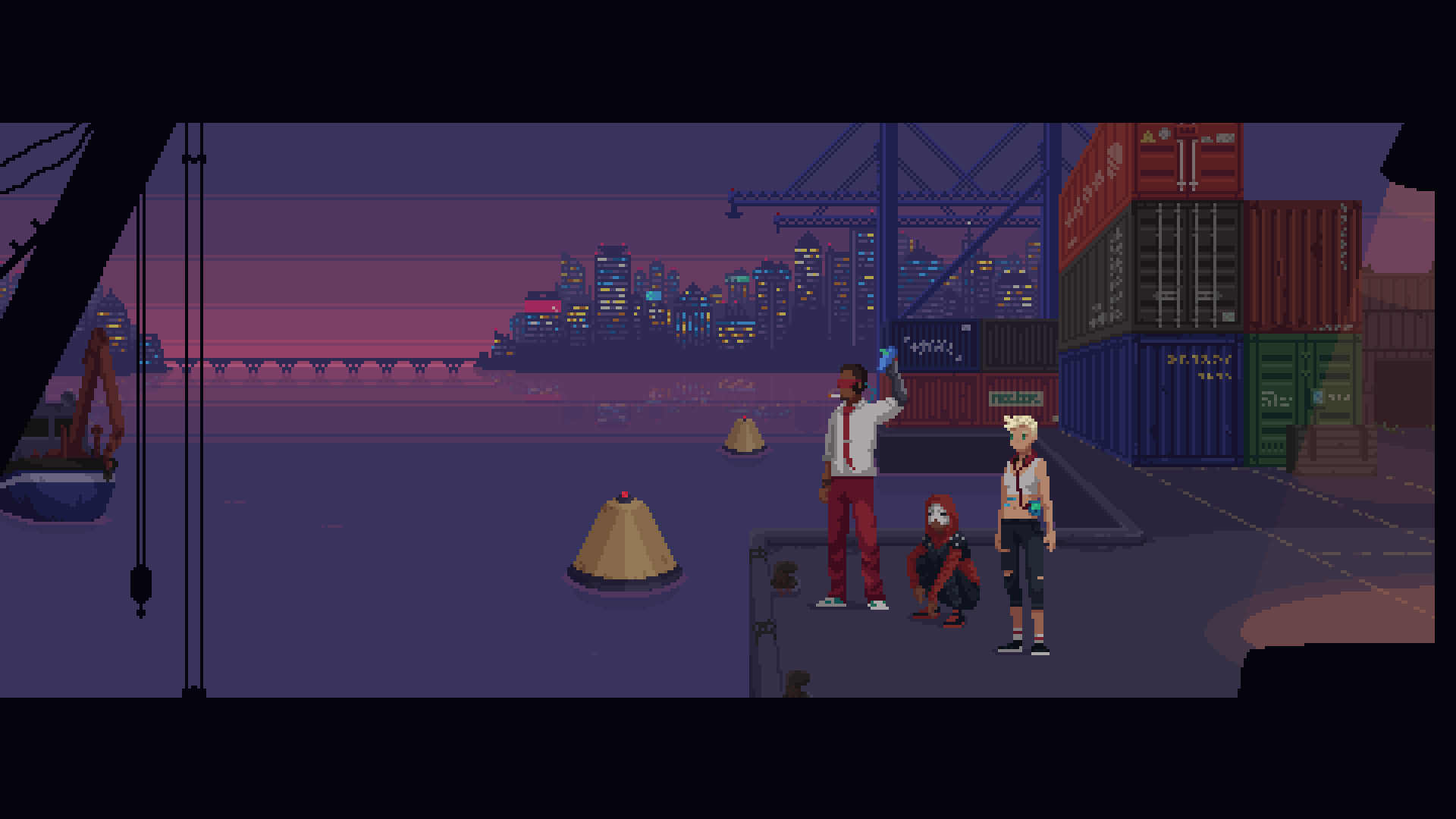
I'm a huge Deus Ex fan, and the themes of transhumanism, conspiracy and societal responsibility presented in The Red Strings Club wouldn't be out of place in the likes of Human Revolution. The Red Strings Club gives us the prospect of handling the uncovering and disarming of a world-altering event on a small scale - through the titular club and a few other sparsely used locations. It's an intensely personal experience, with a small ensemble cast of critical characters which you'll come to know, manipulate and perhaps, even destroy. It looks like a point and click adventure game but functions mostly as a series of dialogue choices, with hands-on gameplay mechanics ranging from mixing drinks, to tapping phones, to...futuristic pottery, of a sort. There's something Papers Please in the presentation - silhouetted figures at the bar with blank expressions and pixel art driven personality.
The game doesn't like giving easy answers to the plot, and in turn, it likes asking questions of the player about their own feelings and motivation. This helps guide the story - whether you're telling an android your opinion on societal issues, or trying to figure out which emotion to tap when mixing a drink before questioning a patron, there's a real sense of agency that pushes past the fourth wall. It's a confident, fascinating and well-written project that fumbles a little near the finish line but ultimately stuck the landing for me. It made me think about the nature - and value - of happiness above all else.
4. Dead Cells

In a year with a lot of games trying interesting, daring things (either with established franchises or new IPs), it's nice just to play a super polished, sharp, tough game like Dead Cells. It brings in a lot of elements from other games and gives the package a unique feel - one where basic strategy helps, but ultimately means very little compared to raw ability to get your hands dirty without taking hits.
3. God of War

I probably sound like I don't like a lot of stuff on this blog, especially for a piece that is ostensibly meant to be a positive take on the year in question. With that said, God of War was definitely something I didn't like in the past. Too many of the story/presentation elements were overwrought and juvenile (and to be fair, that seemed to be the point) and Devil May Cry style combo-heavy third-person action games were never my favourite sub-genre. So, it's fair to say I wasn't expecting a heap from this new God of War, and only really picked up due to good timing and positive word of mouth.

The lineup of characters here is wonderful and truly memorable - from disembodied guide Mimir, to dwarven blacksmiths Brok and Sindri, to the realistically petulant Atreus, the awe-inspiring and strangely warm World Serpent. It's quality writing, with just enough levity to balance out what is quite an emotional journey of discovery and family ties. Combat is sharp and punchy, with a surprisingly diverse move set and some actual, controller squeezing, teeth gritting challenge in the late-game.
All in all, God of War is really what we should expect when a game is draped in the banner of being a 'AAA' product. This is of the highest quality across the board; a game that delivers on being a polished, enjoyable to play piece of interactive media that still manages to try daring things with the narrative presentation and characters.
2. Red Dead Redemption 2

RDR2 is a standout example of the freedom a company can earn from years of quality, high selling releases. Some companies double down on the profit-making side of things, turning every game into a 'live service' and cutting out as much single player content as possible. Some companies attach themselves as a first or second party developer to make exclusive games - a role which we are increasingly seeing high-quality productions emerge from. The other option is to do what Rockstar did - spend an obscene amount of money (at least 300 million dollars from reports) and seven years creating a beautiful, epic experience with a surprisingly niche appeal and overly complex systems.
It might sound weird because the game sold incredibly well, but I don't think a lot of people saw RDR2 through. I think a hell of a lot of people played it, most appreciated it and were wowed by the environments and acting, but anecdotally most of the results seem to be the same. You jump in, get lost for a few hours, get frustrated and don't come back. Going by trophy data, between 20-30% of people on PS4 finished RDR2.
The point I'm trying to make is that this game is 100%, unequivocally the game Rockstar wanted to make. There's good and bad in that. It's such an incredible technical achievement that you can understand why Rockstar workers were under the pump despite having 7 years to make the game. But it is no doubt a frustrating experience at times. Movement leans towards realism - which means a lot of time sitting on a horse with the cinematic camera activated, watching the (admittedly very pretty) vistas roll by. You need a couple of steps to get into your stride, leading to a strange 'wind-up' (and down) time for movement. Trees will clothesline you off your horse. You'll barrel through your fair share of civilians and lawmen in Saint Denis without meaning to. By the 20th time you stumble off a ledge or brain your horse into a tree because you weren't paying attention, it can become difficult to want to continue fighting the controls.

But god, you should. You really should. This is one of the great videogame stories, one that often feels more like a good, high budget cable TV series than a videogame. The acting and motion capture would probably only be fighting it out with Naughty Dog's productions for the best seen in a game. Arthur is a good, well-realised protagonist but Dutch is the truly remarkable character here - you completely understand how those around him got sucked into the cult of personality, and also why it could never last.
I do understand why RDR2 doesn't work for some. I also feel like the pros and cons have been done to death by this stage. The online is a big 'eh' and nearly everyone who wanted to play the single player content has done as much as they will ever do with it. For me, I accept the game's flaws, but they could never have the ability to override the few weeks RDR2 had a real hold on me. The experience is intoxicating - the atmosphere, the deliberate nature of tasks, the comfortable flow of the missions and exploration. It's a remarkable achievement.
1. Slay the Spire

The one real boon I've received from putting this out so late is that Slay the Spire is officially out as a full, 1.0 version release. It's a tricky tightrope to walk when it comes to early access games and end of year lists, but Slay the Spire would have made it on here regardless. I've never been into card based RPGs, but I do love roguelikes, and Slay the Spire is a smart roguelike. There's an insidiousness to how this game builds up and takes hold of you, before your every thought is occupied with how to approach the next run you take.
The game has a great sense of personality - not only graphically (they're simple, but mighty effective) but in the philosophy of how to approach a deck-building game. A lot of these games, both on tables and screens, are built around investing a lot of time in the collection and creation of a deck that is a reflection of personal strategy and preference. Slay the Spire manages to capture a surprising amount of that spirit while still allowing this chaotic, balls to the wall (adjective I'd never thought I'd describe a card-based roguelike with right there), free-form gameplay to emerge. You can lean towards certain strategies, but you cannot go in with a pre-determined mindset and have to adjust on the fly. Adapt or die.

I've recommended this to a hell of a lot of people since I first played it in early access and it has this undeniable appeal to nearly all types of game player. It's utterly brilliant in its design and craftsmanship, with amazingly well balanced cards and classes and new features and content still being added. It's not the easiest sell, but I implore anyone with the faintest interest to give it a go. It's easily the game from 2018 that'll linger with me longest, which is why it's #1 on this list.
The game has a great sense of personality - not only graphically (they're simple, but mighty effective) but in the philosophy of how to approach a deck-building game. A lot of these games, both on tables and screens, are built around investing a lot of time in the collection and creation of a deck that is a reflection of personal strategy and preference. Slay the Spire manages to capture a surprising amount of that spirit while still allowing this chaotic, balls to the wall (adjective I'd never thought I'd describe a card-based roguelike with right there), free-form gameplay to emerge. You can lean towards certain strategies, but you cannot go in with a pre-determined mindset and have to adjust on the fly. Adapt or die.
I've recommended this to a hell of a lot of people since I first played it in early access and it has this undeniable appeal to nearly all types of game player. It's utterly brilliant in its design and craftsmanship, with amazingly well balanced cards and classes and new features and content still being added. It's not the easiest sell, but I implore anyone with the faintest interest to give it a go. It's easily the game from 2018 that'll linger with me longest, which is why it's #1 on this list.


Comments
Post a Comment